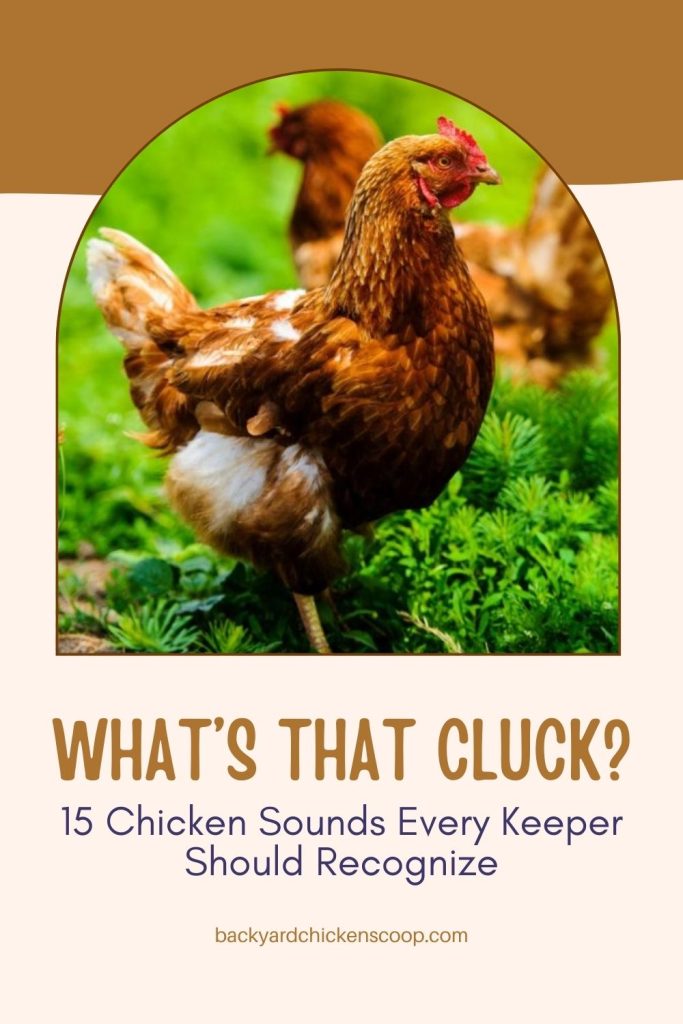
Did you know that chickens have their own unique language which they use to communicate with each other? Those noises you hear coming from a chicken coop aren’t just meaningless squawks – they’re constantly passing on information, warnings, or just telling each other how they feel. Adorable!
So, to help you understand the language of chickens, we’ve identified the unique sounds that chickens make and what they mean.
1. Clucking

Ask any kindergartener what noise chickens make, and they’ll say “cluck cluck”! This is the contented sound that hens make as they go about their day, signaling that everything is calm and good in the world. You will hear this sound mostly when the hens are foraging or first thing in the morning when they gather outside for breakfast.
2. Cackling (AKA the “egg song”)

Aah, the wonderful egg song! As the name suggests, this excited “bawk-bawk-bawk” chicken sound is normally heard after the hen has laid an egg. Sometimes other hens in the flock and even the rooster will join in, creating a wonderful chorus of celebratory song!
Animal behaviorists are unsure of the purpose of the egg song – some think they are calling to the rooster to be escorted from the nest, while others think they could be drawing the attention of potential egg-eating predators away from their newly laid egg.
3. Crowing

The loud “cock-a-doodle-doo” call of the rooster serves as a territorial declaration of their position as the flock leader. Crowing is most commonly heard at dawn to greet the morning, but roosters will also crow during the day when they are guarding their flock. Individual roosters often have very distinctive calls and they will crow in response to hearing other roosters a considerable distance away.
4. Purring

Chickens will make a soft, gentle “purr” or “coo” sound when they are content or relaxed, showing that they feel safe and protected. It’s often heard when they are roosting, soaking up sunlight, or simply hanging out together in a dust bath. Mother hens will also purr to their chicks as reassurance that they are safe, warm, and protected.
5. Chirping

To human ears, baby chicks might all sound the same, but a mother hen can recognize her baby’s chirps from up to 20 meters away. These high-pitched tones can indicate many things, including hunger, discomfort, or distress.
6. Growling

When a hen is defending her nest or feels threatened, she will emit a low, guttural growl. This is a protective sound, warning others to stay away from her eggs or young chicks. The hen may also ruffle her feathers to make herself look larger and more threatening.
7. Squawking

Squawking normally occurs when a chicken is startled or scared, perhaps because a potential threat is nearby or there is some squabbling between the flock. This sound is perhaps most like a human scream – an involuntary noise that signals distress or fear.
8. Alarm call

Alarm calls in chickens are fascinating, as they can vary according to the location of the threat. Roosters normally have one loud squawking noise for ariel predators and another for threats on the ground, helping to instantly alert the flock to the location of whatever he has spotted. If the flock doesn’t have a rooster, the most dominant hen will sometimes take on this role.
As well as the initial alarm call, many roosters will continue to warn the flock by making a noise very similar to the egg song. It is very common for the hens to join in too, in which case they can make a considerable racket!
9. Grumbling

The grumbling noise that chickens make indicates that they are in a relaxed state and typically occurs when they are foraging or relaxing. This is a conversational sound that indicates they are content and calm, often made while pecking around for food or during social interactions with the other members of the flock.
10. Peeping

You’d be hard-pressed to tell the difference between a chick peeping or chirping, but their mothers can recognize the difference between these sounds. A repetitive, light “peep-peep” sound is a signal of contentment or the need for reassurance from their mother. It is typically made when chicks are looking for their mother, especially when they are trying to find her after being separated.
11. Whining

A long, drawn-out “whine” is made by hens who are frustrated, often when they are trying to lay an egg but can’t find an ideal place to do so. Our hens often do this when there is a queue for their favorite nesting box or if they are struggling to get comfortable.
12. Food call

The food call is a series of soft but rapid “chur-chur” or “brr-brr” sounds, often accompanied by excited scratching or pecking at the ground. This noise is normally made by roosters and mother hens and indicates that a tasty food source has been found. The food call is guaranteed to bring the rest of the flock running in the hope that they’ll be first to get to the delicious treat!
13. Cooing

Roosters sometimes make a soft repetitive cooing noise when encouraging hens to nest in a safe, quiet area. He may also puff out his chest or even act as a “lookout” to ensure the hens feel comfortable and protected as they settle down to lay. This adorable behavior strengthens his role as the protector and leader of the flock and increases his chances of reproductive success.
14. Lost call

The lost call is typically a series of high-pitched, drawn-out “whines” or “chirps,” often more intense or urgent than their usual clucking or chirping. Young chicks make this sound if they get separated from their mother or siblings, and even adult chickens will make the lost call if they’re isolated or unsure of their surroundings. This sound is essentially a “Where are you?” call that allows the flock to locate each other and is heard more commonly in free-ranging chickens.
15. The ‘pre-lay’ call

When a hen is searching for the perfect place to lay her egg, she will make a series of low, rhythmic clucks or murmurs that increase in intensity and frequency as the hen gets closer to laying. This call generally stops once the hen has settled into a nesting box, at which point she goes into a trance-like state until the egg is laid.
19 Things You Should Know Before Getting Chickens

Before you jump into the world of chicken-keeping, there are a few essential things to know. Here’s our comprehensive guide of 19 essential tips to help you become a confident and successful chicken owner!
19 Things You Should Know Before Getting Chickens
How to Choose a Heritage Chicken Breed for Your Homestead

Many homesteaders raise heritage breed chickens on their land for eggs, meat, or both. Here are the best ways to choose a heritage breed over a hybrid or production breed.
How to Choose a Heritage Chicken Breed for the Home
How to Raise Your Own Chickens

Here’s a guide on how to raise your own chickens to lay eggs and eat meat.
How to Raise Your Own Chickens