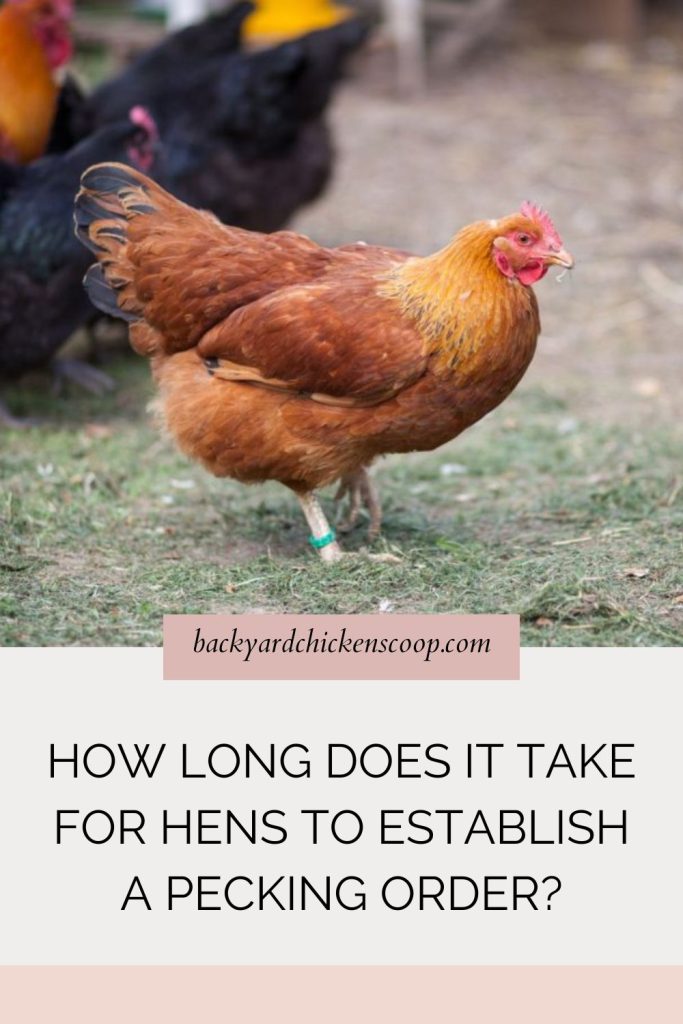
Chickens are social creatures that prefer to live in flocks. Like people and most other social animals, politics comes into play. Each one wants to be considered more important and get the best food and sleeping spot. This behavior is natural and will occur whether you have ten hens or one hundred.
Establishing a pecking order amongst hens can take a few days or weeks. Available space, feeding and watering conditions, boredom, the amount of light, chicken breeds, and individual personalities affect aggression. The pecking order remains fluid, changing over time and with the seasons.
We have all encountered the expression of a hen-pecked husband. The term originated from chickens’ very real social order, established by pecking.

If you establish a new flock of birds that have not been together before, it may take longer for them to settle down. Expect about two to three weeks for the hens to determine who is on the lowest rung and who is the most dominant.
A problem can arise if you have several particularly dominant hens who do not wish to yield their position to another hen. This situation can prolong the dominance struggle.
When a new hen is introduced to a flock, it can take two or three days or even a week before the pecking order settles down and the newcomer knows her place. Birds introduced in groups of three or four seem to do better than when a single bird is brought into the flock.
How Is The Pecking Order Established In Chickens?
The most dominant hen chooses where to eat. When she decides to eat at a spot, other hens rapidly move out of her way or face the consequences. She may also be the first out of the henhouse in the morning.
The hen at the top of the pecking order will occupy the top spot on the roosting perches. If a wide porch exists, the top hen will be on the top perch, usually in the middle of the other birds on that level.
The chief hen chooses this spot because it is the most protected place. Predators will first take birds on lower rungs or from the outer edges. They are easier to get to and allow the predator to quickly escape if needed.
The least dominant hen is timid and snatches food from bowls when she can. Other birds will harass and peck her if she gets in their way. Some submissive hens are reluctant to leave the henhouse. They are often the last to leave the enclosure in the morning.
Submissive hens occupy the lowest perches when roosting, usually on the edges. They can be easily identified by their anxious, skittish demeanor. The hen may have wounds and be missing feathers if the bullying is severe.
Are Some Hens Bigger Bullies Than Others?
Some hens are just plain mean and seem to be natural bullies. This characteristic is often due to individual personality. People who do not keep chickens may be surprised to learn that chickens have personalities. You only need to sit and observe for a while to see that the chicken coop is like a children’s playground with bullies and those who always seem to be bullied.
The chicken breed can affect aggression levels. Some people automatically assume that the bigger breeds must be more aggressive. This is not always true. Orpingtons, which are large chickens, are often gentle birds.
Aseel, Malay, and Crevecoeur hens are known for their aggressive personalities and are commonly involved in henhouse bullying.
When Should You Intervene In Pecking Order?

Many people who keep backyard chickens are horrified by the bullying that occurs amongst chickens. Chickens establishing their pecking order is natural, and it is almost impossible to stop it.
If you notice that lower-ranking hens are bloody, missing feathers, or losing weight, it is time to intervene. You may need to spend some time with the chickens to identify the culprit who is bullying them.
How Do You Stop Chickens From Pecking One Another?
Chickens will always peck one another. Pecking becomes a problem when excessive and becomes bullying instead of occasional normal pecking.
The hen doing the bullying may be relocated to another flock on your property or given away to a new home. If you wish to keep the hen, you need to topple that hen from her position in the pecking order.
The best method is to remove the hen from the daily chicken interaction without taking her out of the coop. Make a small pen or crate inside the henhouse and put the dominant hen in it for at least a week. She should still see the other chickens but cannot physically interact with them.
If the crate is moveable, she can be put in the crate in the henhouse when the chickens are put away at night. After a week, you can allow the hen back into the flock. The best way to do this is to allow the other chickens to go into the enclosure at night and establish themselves on the roosting perches. When they are settled, let the hen into the henhouse to join them. She will end up on the lower rungs or the edges of the perch.
Chicken toys help distract chickens and reduce bullying and pecking. Sufficient coop space is critical in lessening pecking.
Why Are My Hens More Aggressive In Summer?

Longer daylight hours trigger reproductive behaviour, making some hens more aggressive during summer. Chickens become less dominant when they molt. This rearranges the pecking order and may lead to permanent changes where younger chickens have a chance to climb up the social order.
Other Ideas You Might Like
- 14 Best Chicken Breeds That Consistently Lay Great Eggs
- How to Raise Meat Chickens
- How to Choose a Heritage Chicken Breed for the Homestead
Conclusion
The pecking order in a flock can be established within a few days or may take several weeks. Various environmental factors can affect aggression levels. Some breeds and individuals are more feisty than others and will cause more havoc in the flock.
References